Rats & Mice Control Guide
How to spot an infestation early, what actually works for DIY trapping, and when a rodent problem needs a professional.
Recommended Rat & Mouse Control Products
-
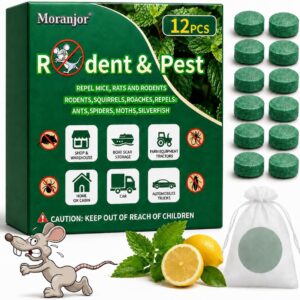
12-Pack Mice Repellent Balls – Long-Lasting Rodent & Pest Deterrent for Indoor & Outdoor Use, Repels Mice, Rats, Spiders & Roaches, Ideal for Cars, RVs, Garages, Sheds & Boats
£14.59 Buy Now -
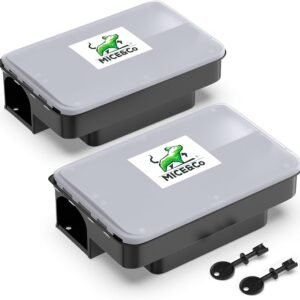
2-Pack Rat and Mouse Bait Boxes with Clear Lids, Rodent Bait Stations
£13.99 Buy Now -
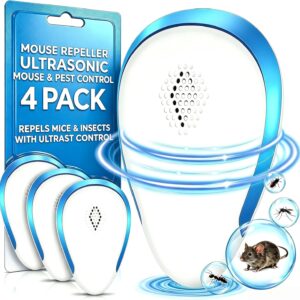
4-Pack Ultrasonic Pest Repeller – Plug-In Mouse & Rodent Repellent for Home, Garage & Office, Repels Mice, Rats, Ants, Spiders & Mosquitoes, Pet & Child Friendly (Blue)
£16.99 Buy Now -
Sale!
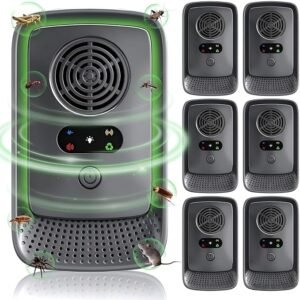
6-Pack Ultrasonic Pest Repeller Plug-in | 4-Mode Pest Control for Mice, Insects, Spiders & Mosquitoes | Safe for Kids & Pets
Original price was: £39.99.£23.99Current price is: £23.99. Buy Now -
Sale!
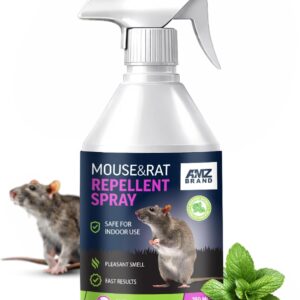
AMZ Premium Mouse Repellent Spray – 250ml | Peppermint Oil, Natural & Pet-Friendly
Original price was: £19.67.£13.99Current price is: £13.99. Buy Now -
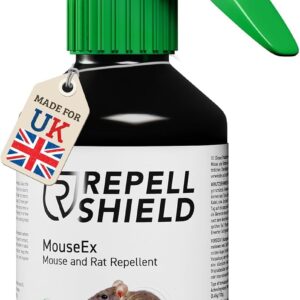
RepellShield Rat & Mouse Repellent Spray – 250ml | Peppermint Oil, Pet & Family Safe
£13.99 Buy Now
Signs you have rats or mice
Rodents are mostly nocturnal, so the animal itself is often the last thing you notice. Droppings are usually the first sign — dark, pellet-shaped, concentrated along walls, under sinks, or near food storage. A gnawed corner on a cereal box or a chewed skirting board is another giveaway; rodent incisors never stop growing, so they gnaw constantly to keep them worn down. At night you might hear scratching in a loft, wall cavity, or under floorboards. A stale, ammonia-like smell in a confined space often means a nest is nearby. Grease marks along skirting are a subtler sign — rodents travel the same routes repeatedly, leaving a dark smudge at floor level over time.
Rats vs mice: telling them apart
Getting the species right matters because it changes the approach. House mice are small, with large ears relative to their head and a tail as long as their body. Droppings are tiny, rice-grain sized, and scattered widely since mice explore constantly. Brown rats are considerably larger, with smaller ears and a thicker, shorter tail; their droppings are larger and tend to cluster near one consistent spot rather than being spread everywhere.
Mice are naturally curious and investigate new objects, including traps, quickly. Rats are more cautious — they’ll often avoid a new object for several days before approaching it, which is why rat trapping usually takes longer to show results than mouse trapping.
Health and property risks
Rodents can contaminate food and surfaces with droppings and urine, and are known carriers of bacteria including Salmonella. Rats specifically carry a risk of Weil’s disease (leptospirosis), spread through contact with water or surfaces contaminated by rat urine — serious but genuinely rare, and worth being aware of if you handle standing water or drains where rats have been active.
Beyond health, the gnawing causes real property damage: chewed electrical cabling is a recognised fire risk, and gnawed pipes or insulation lead to costly repairs. Rodent problems are worth treating promptly — colonies grow fast, and mice in particular can breed roughly every three weeks in good conditions.
Prevention: sealing entry points
A mouse can squeeze through a gap the width of a pencil; a rat needs a gap roughly the size of a 50p coin. Prevention starts with walking the outside of the property and checking gaps around pipework, vents, and cable entries. Wire wool or a proper rodent-proofing mesh, packed into gaps and sealed over with expanding foam, is far more effective than foam alone, since rodents can gnaw straight through plain foam.
Indoors, keeping food in sealed containers removes the main attractant, and clearing clutter in lofts and garages reduces the nesting spots that let a small problem quietly grow.
DIY control: traps and bait stations
Snap traps remain the most reliable DIY option for a small mouse problem — fast, inexpensive, and easy to check. Place them against walls, perpendicular to the skirting, since rodents travel along edges rather than across open floor space. For rats, break-back traps rated for rat size work the same way but need patience, since rats are wary of new objects; leaving a trap unset and baited for a few days first often improves results.
Enclosed bait stations with rodenticide are effective for larger infestations, but carry more responsibility: they must be tamper-resistant and placed well away from pets, children, and non-target wildlife. Current guidance discourages routine amateur use of second-generation anticoagulant rodenticides, which are reserved for professional use because of the risk to predators further up the food chain.
When to call a professional
A single mouse caught quickly with a couple of well-placed traps is a reasonable DIY job. It’s time to call a licensed pest controller if traps keep catching rodents after a week or two without the numbers dropping, if you suspect rats rather than mice (rats often need a more coordinated strategy than a homeowner can safely manage), if the nest is in a wall cavity you can’t access, or if you have young children, pets, or anyone with a compromised immune system in the home.
FAQ
How do I know if it’s a rat or a mouse?
Size and droppings are the fastest tell: mice leave tiny, rice-grain-sized droppings scattered widely, while rat droppings are noticeably larger and tend to cluster near one spot. Rats also leave a thicker, shorter-looking tail and smaller ears relative to a mouse.
How long does it take to get rid of mice with traps?
A small mouse problem often clears within a week of consistent trapping. If you’re still catching mice after two to three weeks, there may be an ongoing entry point letting new mice in, which is worth investigating alongside the trapping.
Are rodent bait stations safe to use at home?
Enclosed, tamper-resistant bait stations are designed to keep the bait inaccessible to pets and children, but placement still matters — keep them against walls, out of reach, and away from areas pets frequent. For ongoing or larger infestations, professional-grade rodenticide use is generally best left to a licensed technician.
Why do I keep hearing noises in my loft at night?
Rodents are most active at night, and a loft or wall cavity is a common nesting spot since it’s dark, undisturbed, and often has good access to insulation for bedding. If the noise continues after trapping, it’s worth checking the loft directly or having a professional inspect it.
This page contains affiliate links, including to Amazon. As an Amazon Associate, Pest Expert may earn from qualifying purchases at no extra cost to you. Recommendations are based on independent research, not paid placements. Always follow product label instructions, and consult a licensed pest control professional for infestations that don’t respond to DIY treatment.
📋 Quick Facts
- 🐭Mice breed roughly every 3 weeks in good conditions
- 🐀Rats need a gap the size of a 50p coin to get in
- ⚠️Rat urine carries a small risk of Weil’s disease
- 🔥Gnawed cabling is a recognised fire risk
🛒 Trap & Seal Essentials
Snap traps and rodent-proofing mesh cover most DIY rat and mouse problems.
Shop rodent control on Amazon →⚠️ Seen rats near drains?
Avoid handling standing water or drains where rat activity is suspected without gloves — this is the main route for Weil’s disease exposure.
Dealing with a rodent problem right now?
Read our in-depth trapping guides, or get in touch if you need a hand figuring out next steps.