Ant Control Guide
Why ants come indoors, why bait beats spray, and how to stop a trail from coming back.
Recommended Ant Control Products
-
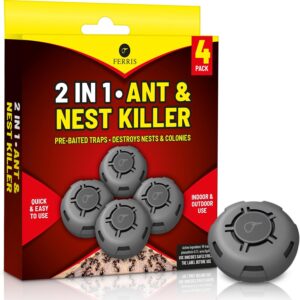
FERRIS Ant Killer Bait Stations – 4 Pack | Destroys Ants & Nests, Indoor & Outdoor Use
£18.99 Buy Now -
Sale!
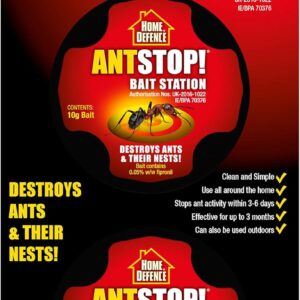
Home Defence Ant Stop! Bait Station – Ant Killer & Colony Control
Original price was: £29.97.£19.99Current price is: £19.99. Buy Now -
Sale!
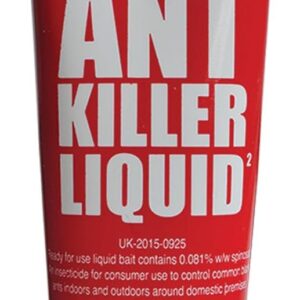
Nippon Ant Killer Liquid – 25g | Indoor & Outdoor Ant Control, Kills Ants & Colonies
Original price was: £5.32.£4.55Current price is: £4.55. Buy Now -
Sale!
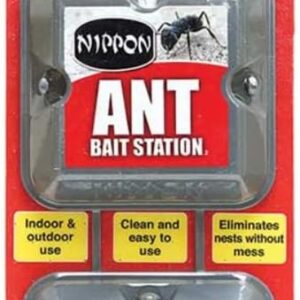
Nippon Ant Stop Bait Stations – 2 Pack | Ant & Nest Killer, Home Defence
Original price was: £8.95.£8.65Current price is: £8.65. Buy Now
Signs you have an ant problem
The clearest sign is a visible trail — a fairly straight line of worker ants moving between a gap in the skirting or window frame and a food source in the kitchen. Ants follow a pheromone scent trail laid down by earlier workers, which is why the line rarely wanders. You might also notice small piles of fine soil near patio slabs or foundations outside, which often marks a nest entrance.
Garden ants vs pharaoh ants
Black garden ants are by far the most common indoor visitor — they nest outdoors, under paving or in soil near the foundation, and send workers inside purely to forage for food. Their trails tend to appear seasonally, picking up in warmer months as colonies become more active.
Pharaoh ants are a different matter: small, pale yellow-brown, and capable of nesting indoors year-round in warm voids like wall cavities or near boilers. They’re a genuine problem in flats and larger buildings because their colonies can split and “bud” into several smaller colonies when disturbed — which is exactly what happens if you spray a pharaoh ant trail with a contact insecticide.
Why ants come indoors
Worker ants are constantly foraging, and a kitchen offers a concentrated, reliable food source compared to whatever is available outdoors. Sugary spills, pet food left out, and unsealed food packaging are the most common draws. Gaps around windows, doors, cable entries, and patio doors are the typical entry points, especially where external pointing or sealant has worn away over time.
DIY control: bait beats spray
Contact sprays kill the ants you can see but do nothing to the nest, which is why a trail so often reappears within a day or two using a slightly different route. Gel bait works the opposite way: it’s a slow-acting insecticide mixed with an attractant, so a worker carries it back to the colony and shares it with the queen and larvae — the only approach that actually collapses the colony rather than just clearing a visible trail.
Place bait directly on or very close to the trail itself rather than somewhere general in the kitchen, since ants rarely detour more than a few centimetres to investigate something new. Avoid combining bait with a repellent spray in the same area in the first week or two, since repellents can put ants off the bait entirely.
Preventing ants long-term
Sealing obvious gaps with silicone caulk around windows, doors, and pipe entries removes the entry point rather than just masking it, and is the single most effective long-term step. Wiping up spills promptly and keeping sugary or greasy food in sealed containers removes the attractant that draws foragers in the first place. Outdoors, moving bird feeders and compost bins away from the house reduces the food supply that keeps a nearby colony active.
When to call a professional
Most garden ant trails clear up within one to two weeks of consistent gel bait use. It’s worth calling a licensed technician if the trail keeps returning from a different spot after two to three weeks of baiting, if you suspect pharaoh ants given the risks of DIY spraying already covered above, or if you’re seeing large numbers of flying ants indoors, which usually points to a mature, well-established colony rather than a small foraging trail. Professionals also use non-repellent insecticides not sold to the public, formulated specifically to avoid the colony-splitting problem.
FAQ
Do ant sprays actually work?
They kill ants on contact, stopping a trail temporarily, but don’t reach the nest or queen. Gel bait is the more effective long-term choice for actually clearing a colony.
How long does ant bait take to work?
Most gel baits show a clear drop in trail activity within one to two weeks. A temporary rise in ants at the bait station in the first few days is expected, not a sign of failure.
Why do I see more ants in summer?
Garden ant colonies become more active as temperatures rise, sending out more foragers to collect food for the growing colony. Trails often reduce naturally as temperatures drop in autumn.
Are the small ants in my bathroom dangerous?
Small pale ants active year-round, especially near warm pipework, may be pharaoh ants rather than garden ants. They’re not directly dangerous to health, but they can contaminate food and are genuinely difficult to eliminate with DIY sprays, so bait or a professional is the better route.
This page contains affiliate links, including to Amazon. As an Amazon Associate, Pest Expert may earn from qualifying purchases at no extra cost to you. Recommendations are based on independent research, not paid placements. Always follow product label instructions, and consult a licensed pest control professional for infestations that don’t respond to DIY treatment.
📋 Quick Facts
- 🐜Ants follow a pheromone trail between nest and food
- 🏠Pharaoh ants can nest indoors year-round
- ⚠️Spraying pharaoh ants can split the colony
- 🕐Gel bait usually clears a trail in 1-2 weeks
🛒 Ant Bait & Sealant
Gel bait stations plus a silicone sealant for entry points covers most household ant problems.
Shop ant control on Amazon →⚠️ Seeing tiny pale ants year-round?
That may be pharaoh ants rather than garden ants — don’t spray the trail, as it can split the colony into several smaller ones.
Dealing with an ant trail right now?
Read our in-depth ant killer buying guide, or get in touch if you’re not sure what you’re dealing with.